
In short: Koh Samui’s three best-known temples are Wat Phra Yai, with its 12-metre golden Big Buddha on an islet off the north-east coast; Wat Plai Laem nearby, with a giant 18-armed statue of the Chinese goddess Guanyin; and Wat Khunaram in the south, where the body of the monk Luang Pho Daeng has been displayed since 1973. Older temples such as Wat Samret are quieter. Cover your shoulders and knees and take off your shoes before entering any temple hall.
Most Samui residents are Buddhist, and temples (wat) stand in every village on the island. A few have become major sights. This article explains the main Koh Samui temples, what makes each one special and how to visit them with respect. We wrote it in November 2026 from public sources, listed at the end.
Some words you will see. A wat is a Buddhist temple and monastery. The ubosot (or bot) is the ordination hall, the most sacred building. The Mara posture (also called “calling the earth to witness”) shows the Buddha seated with his right hand pointing to the ground. Guanyin (Kuan Yin in Thai) is the Chinese bodhisattva of compassion, honoured by many Thai-Chinese families.
Wat Phra Yai: the Big Buddha
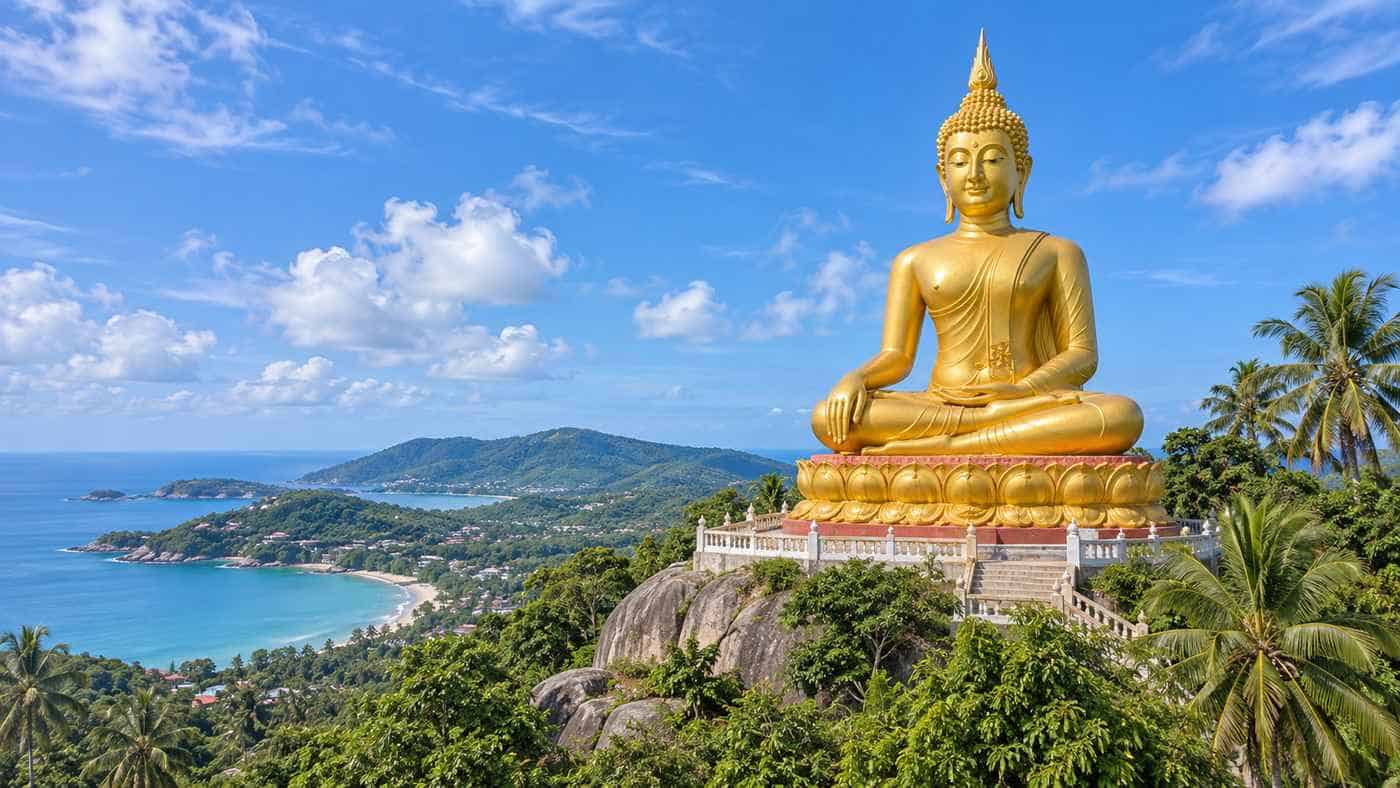
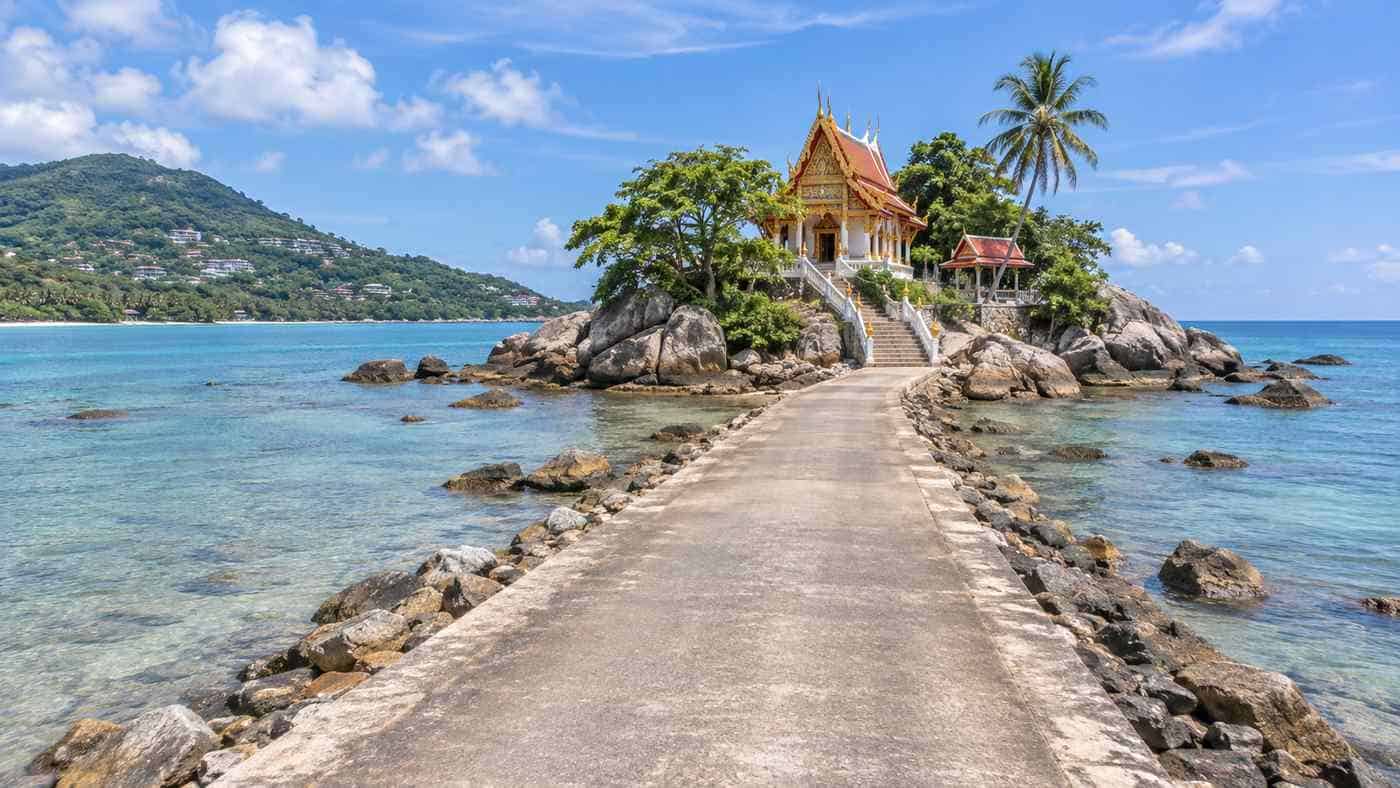
Wat Phra Yai, the Big Buddha temple, stands on the small rocky island of Ko Fan off Samui’s north-east corner, linked to the main island by a causeway. Its golden statue sits in the Mara posture and can be seen from several kilometres away, says the Tourism Authority of Thailand’s news service. The beach facing it is commonly called Big Buddha Beach. Wikipedia says the statue was built in 1972 and is about 3 km north of the airport.
Height figures differ. TAT and Wikipedia give 12 metres, while Wikivoyage gives 15 metres, probably including the base. A staircase leads up to the statue from the temple grounds. Go early or near sunset, when the light is softer and the steps are cooler underfoot.
Wat Plai Laem and its 18-armed Guanyin
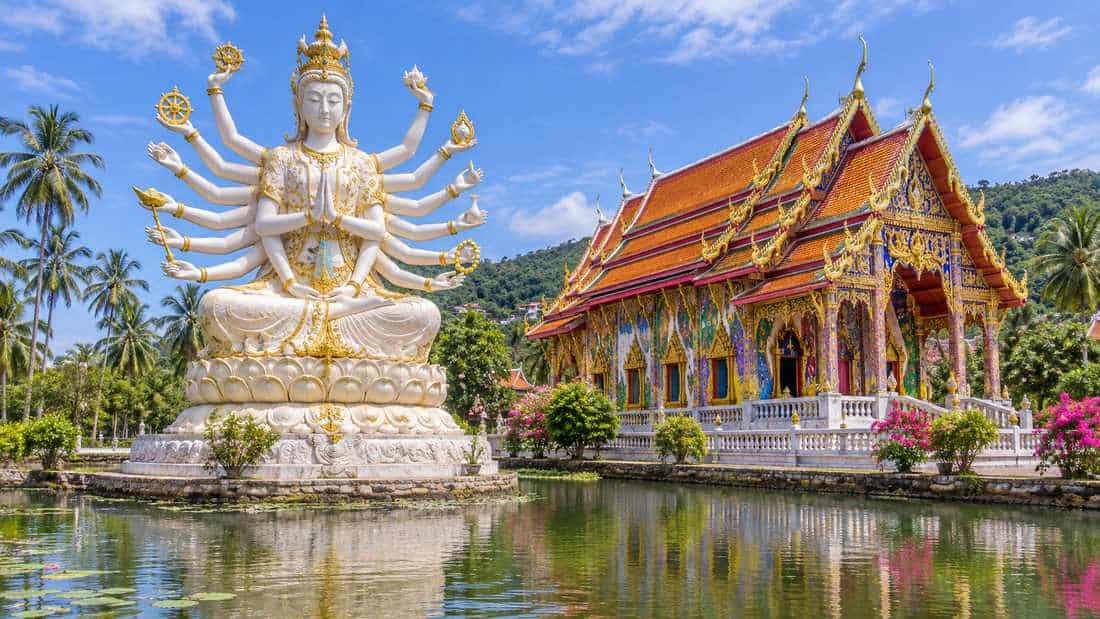
A few hundred metres inland from Bang Rak, just north-west of the Big Buddha off Route 4171, is Wat Plai Laem, a modern temple built beside a pond. Wikipedia notes that it was partly designed by the Thai artist Jarit Phumdonming and is known for its statue of Guanyin with 18 arms, in the Cundi form. Travelfish puts the white statue at about 15 metres high and dates the temple’s work to the early 2000s.
The temple mixes Thai and Chinese styles. Travelfish describes an ordination hall that appears to float above a pond full of fish, and a Guanyin whose 18 arms each hold a tool to ease suffering, with a golden Chinese-style Buddha on her head and a dragon beneath one leg. It lists the temple as open from 08:00 to 17:00, with free entry.
Wat Khunaram and the mummified monk
Wat Khunaram is on the ring road about six kilometres west of Lamai Beach, according to TAT. It is famous for the body of the monk Luang Pho Daeng, who died in 1973 and has been displayed in a glass case ever since. TAT says his body shows little sign of decay apart from the eyes, which are covered with sunglasses. Before he died, he is said to have told his followers to cremate him if his body decomposed, and otherwise to put it on display as a reminder of the Buddha’s teachings.
Wikipedia records that Luang Pho Daeng was born in 1894 and died while meditating. For Thai visitors he is an example of devotion, so behave as you would at a grave: speak quietly and do not point your feet at the case.
Older and quieter temples
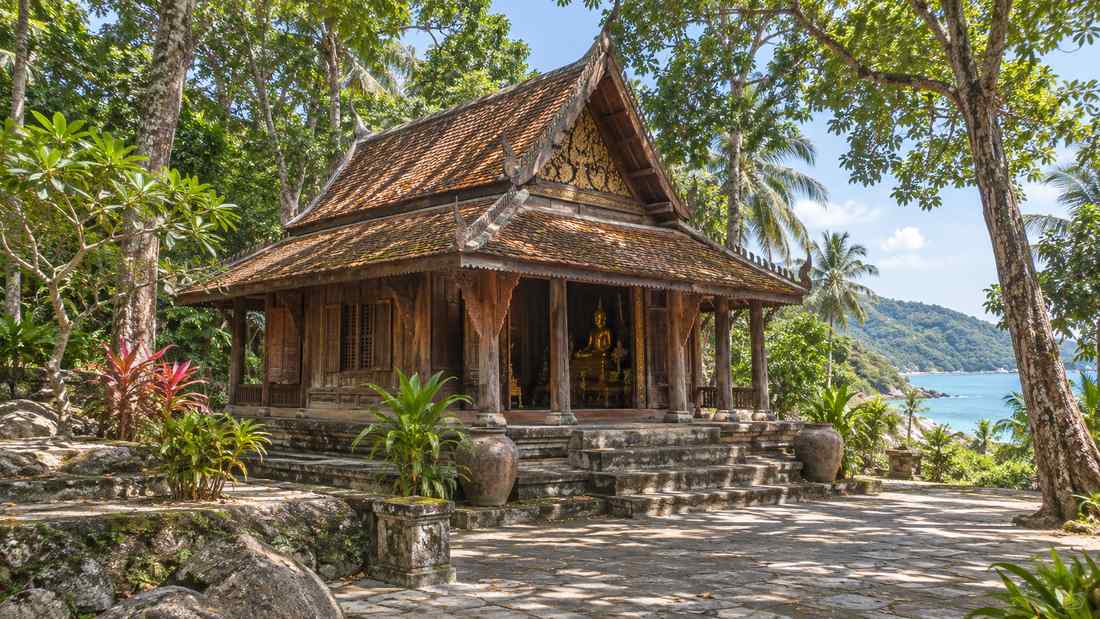
Several village temples show a side of island life that the famous sites do not. Wikipedia lists Wat Samret, Wat Khunaram, Wat Laem Sor, Wat Khiri Wongkaram, Wat Sila Ngu and Wat Phra Yai among the island’s Buddhist temples, and says Wat Samret is one of the oldest, at more than 200 years. These temples have few tourists, and monks may be busy with daily rituals, so visit quietly.
Samui also has Chinese shrines. Wikipedia notes that Hua Thanon, one of the oldest Hainanese settlements on the island, has the tallest statue of Guan Yu, the Chinese god of loyalty and war, in Thailand. The island’s Hainanese history is covered in our guide to Samui’s history and culture.
How should you dress and behave at a temple?
Thai temples are working religious places. Follow these simple rules:
- Cover shoulders and knees. A light scarf or sarong is useful, and some temples lend wraps.
- Take off your shoes before entering any hall with a Buddha image.
- Do not touch monks. Women should not hand anything directly to a monk.
- Do not climb on statues or pose with your back or feet pointing at a Buddha image.
- Keep voices low, and ask before photographing people at prayer.
The Tourism Authority of Thailand asks visitors on Samui to respect Thai values on dress more generally, including not walking around shirtless away from the beach.
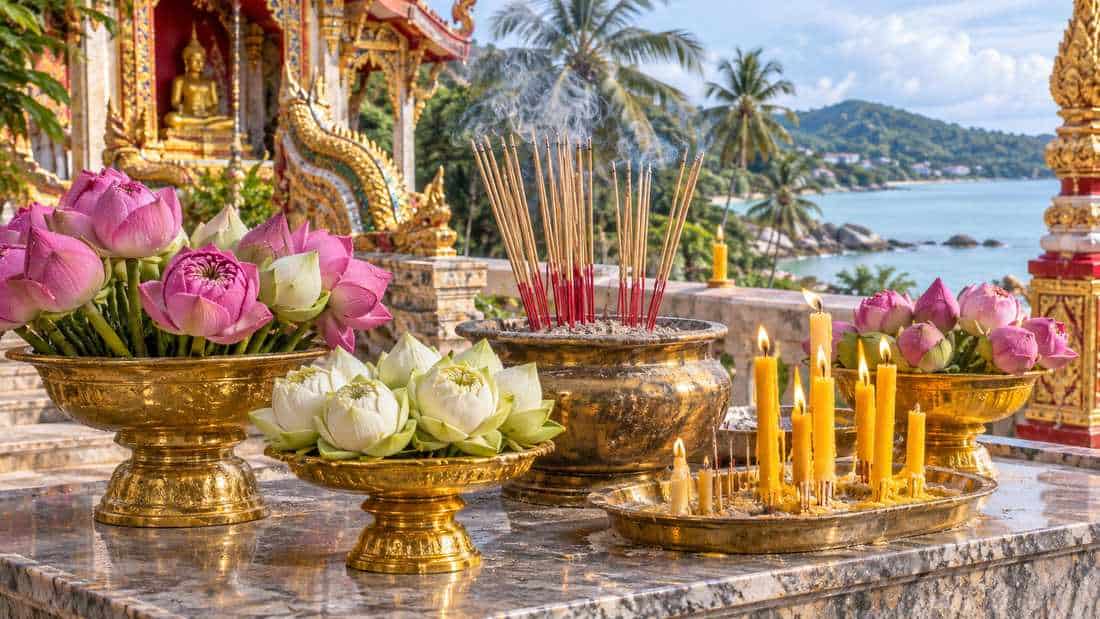
Planning a temple route
Wat Phra Yai and Wat Plai Laem are both in the north-east, near the airport and Big Buddha Beach, and can be seen in two hours. Wat Khunaram is in the south, so combine it with the Na Muang waterfalls and the Hin Ta and Hin Yai rocks. See our guide to Koh Samui attractions for a full day route. Entry to all of these temples is free, though donations are welcome.
| Temple | Area | Known for |
|---|---|---|
| Wat Phra Yai | Ko Fan, north-east | 12-metre golden Big Buddha (1972) |
| Wat Plai Laem | North-east, near Bang Rak | 18-armed Guanyin, hall over a pond |
| Wat Khunaram | South, west of Lamai | Body of Luang Pho Daeng |
| Wat Samret | Village temple | One of the oldest temples, 200+ years |
Key takeaways
- Wat Phra Yai’s Big Buddha (built 1972) is Samui’s best-known landmark. Height figures range from 12 to 15 metres.
- Wat Plai Laem is a modern temple with an 18-armed Guanyin statue about 15 metres high.
- Wat Khunaram holds the body of Luang Pho Daeng, who died in 1973.
- Wat Samret, more than 200 years old, is among the island’s oldest temples.
- Dress modestly and remove your shoes in temple halls.
Common questions
How tall is the Big Buddha on Koh Samui?
TAT and Wikipedia give 12 metres for the statue at Wat Phra Yai. Some guides give 15 metres, which may include the base.
Is there a dress code at Koh Samui temples?
Yes. Cover your shoulders and knees, and take off your shoes before entering halls. Some temples lend wraps at the entrance.
Do you have to pay to enter temples on Samui?
No. The main temples are free to enter, though donation boxes are common and offerings of flowers and incense are sold nearby.
Where is the mummified monk on Koh Samui?
At Wat Khunaram on the ring road, about six kilometres west of Lamai Beach in the south of the island.
What is the statue with many arms at Wat Plai Laem?
It is Guanyin, the Chinese bodhisattva of compassion, shown with 18 arms in the Cundi form.
How we put this together: temple facts come from the Tourism Authority of Thailand’s news service, Wikipedia’s entries on the island, Wat Phra Yai, Wat Plai Laem and Luang Pho Daeng, Wikivoyage and Travelfish, read in November 2026. Where figures differ, we give both. Etiquette advice follows common Thai temple practice.