
In short: The best time to visit Koh Samui is from January to April, when the weather is driest and sunniest. February is the driest month, with about 64 mm of rain. The Koh Samui rainy season is unusual for Thailand: the heaviest rain falls from October to December, peaking in November at around 445 mm. May to September is warm and fairly dry, and a good alternative when Phuket and the Andaman coast are wet.
Updated 20 November 2026 by Samui Tourism Guide editors
Koh Samui is warm all year, with a mean temperature of about 28 °C, according to Wikipedia’s climate figures for the island. What changes through the year is rain, wind and sea conditions. This guide explains the seasons, gives monthly figures and covers festivals that affect prices and crowds. The figures are long-term averages, not forecasts. For the week of your trip, check the Thai Meteorological Department.
Some terms first. The south-west monsoon blows from about May to October and brings rain to Thailand’s west coast and most of the country. The north-east monsoon blows from about November to February. It brings cool, dry air to most of Thailand, but the Gulf coast, including Samui, catches its rain. A rainy day in tropical statistics often means a short, heavy shower, not a full day of rain.
Why is Samui’s weather different from the rest of Thailand?
Most of Thailand has its rainy season from about May to October. Samui sits on the Gulf of Thailand side of the peninsula, sheltered from the south-west monsoon by the mountains of the mainland. It gets its heaviest rain later, when the north-east monsoon blows across the Gulf. Wikivoyage sums it up: Samui is fairly dry from April to September and wet from October to December, when much of the rest of the country is drying out.
This is useful for planning. If you are travelling in July or August, Samui and the nearby islands of Koh Phangan and Koh Tao are often drier than Phuket, Krabi or Khao Lak. If you are travelling in November, the Andaman coast is usually the better beach choice.

Koh Samui weather month by month
The table uses the climate averages shown on Wikivoyage, which match the figures on Wikipedia: about 1,994 mm of rain a year in total.
| Month | Rain (mm) | Average high (°C) | Average low (°C) |
|---|---|---|---|
| January | 127 | 29 | 24 |
| February | 64 | 29 | 25 |
| March | 116 | 30 | 25 |
| April | 83 | 32 | 26 |
| May | 132 | 33 | 26 |
| June | 134 | 33 | 25 |
| July | 117 | 32 | 25 |
| August | 102 | 32 | 25 |
| September | 118 | 32 | 25 |
| October | 295 | 31 | 24 |
| November | 445 | 30 | 24 |
| December | 263 | 29 | 24 |
January to April: the dry, sunny season
January and February are the most comfortable months, dry and slightly cooler, and Wikivoyage names them the best time to visit. Seas are generally calm, and boat trips to Ang Thong National Marine Park run regularly. Prices are highest around Christmas, New Year and Chinese New Year, so book early. March and April are hotter, with highs of 30 to 32 °C, and April is the month of Songkran.

May to September: warm and mostly dry
This is Samui’s long shoulder season. Highs reach about 33 °C, and monthly rain stays around 100 to 135 mm, usually in short showers. The east and north coasts are often calm, which makes swimming at Chaweng, Bophut and Maenam easy. Wikivoyage suggests June to August as the best time for diving around Samui. July and August are busy with European and Asian school holidays, but prices are still lower than in January.
October to December: the Koh Samui rainy season
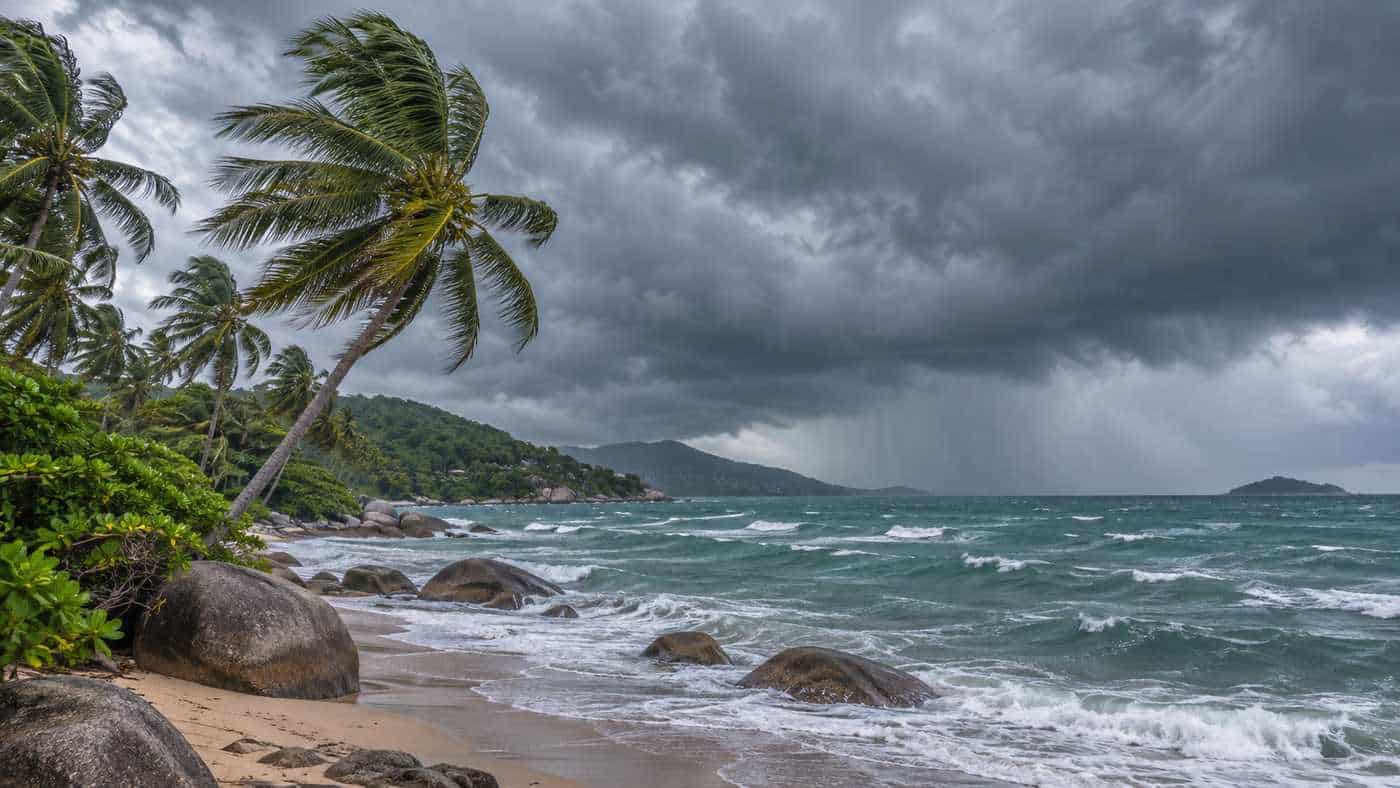
Rain rises sharply in October and peaks in November, when Samui averages about 445 mm, more than seven times February’s figure. Storms can bring several wet days in a row, strong winds and rough seas. Ferries and speedboats are sometimes cancelled, and our guide to getting to Koh Samui explains the alternatives. The Na Muang waterfalls are at their fullest.
Rain usually eases through December, and the Christmas period is often bright. Late November and early December are usually among the cheapest weeks for hotels. If you visit then, plan indoor options such as cooking classes, spas and temple visits.


Festivals and events through the year
- Chinese New Year (January or February) is celebrated by the island’s Thai-Chinese families and at its Chinese shrines.
- Songkran, the Thai New Year on 13 to 15 April, brings water throwing in the streets. Traditional buffalo fights are also held around New Year and Songkran (see our article on Samui buffalo fighting).
- Lah Pho Ta, an island ritual honouring guardian spirits at village shrines, is held in June, according to Wikipedia.
- Loy Krathong, on the full moon of the twelfth lunar month (usually November), is marked by floating small decorated rafts on the sea and lakes.
- Wikipedia also lists newer events such as the Samui Regatta sailing race and the Samui Latin Festival.
The Tourism Authority of Thailand publishes festival and event listings for Ko Samui, which are worth checking before you book.

Choosing the best time to visit Koh Samui
Whatever the month, plan for strong sun: the island sits only about 9 degrees north of the equator, so sunscreen, a hat and plenty of water matter even on cloudy days. In the dry season, book flights, hotels and boat trips early, because Samui’s airport has limited capacity and fares rise quickly. In the shoulder months from May to September, choose a beach on the north or east coast for the calmest water. In the rainy season, pick a hotel with indoor space, keep a flexible day in your plans for boat trips, and allow extra time if you need to catch a ferry to the mainland. Travel insurance that covers delays is worth having from October to December.
Key takeaways
- January to April is the best time to visit, with February the driest month (about 64 mm of rain).
- Samui’s wet season is October to December, peaking in November at about 445 mm.
- May to September is warm and mostly dry on Samui, when the Andaman coast is wet.
- Temperatures are high all year, with a mean of about 28 °C.
- Late November and early December are usually the wettest and among the cheapest weeks.
In the rainy months, the island’s waterfalls run at their fullest; our guide to Na Muang Waterfall explains when the trail is safe to walk.
Common questions
What is the best month to visit Koh Samui?
February is usually the best month: it is the driest, with about 64 mm of rain on average, and temperatures are slightly lower than later in the year.
When is the rainy season on Koh Samui?
The heaviest rain falls from October to December, with November the wettest month. This is later than in most of Thailand.
Is it worth visiting Koh Samui in November?
It can be, if you want low prices and do not mind rain. Expect heavy showers, some rough seas and possible boat cancellations.
Is Koh Samui good in July and August?
Yes. Rain is moderate, the seas on the north and east coasts are often calm, and Samui is usually drier than Phuket at that time.
How hot does Koh Samui get?
Average highs range from about 29 °C in December to February up to about 33 °C in May and June.
How we put this together: monthly figures come from the climate table on Wikivoyage, checked against the annual total and mean temperature on Wikipedia. Seasonal advice draws on Wikivoyage and the Tourism Authority of Thailand, and festival details on Wikipedia, read in November 2026. Averages hide year-to-year variation, so always check a forecast.