
In short: Koh Samui history is a story of fishermen and traders. The island was settled by fishermen and visited by traders for centuries, and it appears on a Chinese map of 1687 as Pulo Cornam. In the 19th century, traders from Hainan in southern China settled and started the coconut and cotton plantations that shaped island life. Samui had no roads until the early 1970s. Backpackers came in the late 1970s, the airport opened in 1989, and tourism is now the main industry. The island keeps its own dialect, rituals such as Loy Khro and dishes such as Yam Rad Ley.
Updated 20 November 2026 by Samui Tourism Guide editors
This page brings together the old site’s notes on Koh Samui culture, people and history into one article. Most of the history below comes from Wikipedia’s article on Ko Samui, which draws on local historians and Samui’s own cultural records. Where something is only oral tradition, we say so. We wrote it in November 2026.
A few terms help. Hainanese are people from Hainan island in southern China, many of whom migrated to Thailand. A muang was a town-based unit of the old Siamese state. Gin Hor is a southern Thai custom in which villagers bring home-cooked food to share at a gathering.
Koh Samui history: early settlers and traders
According to oral tradition, Samui was first settled around the 6th century by fishermen from the Malay Peninsula and visited by passing traders from southern China. Archaeology suggests people lived here far earlier: Wikipedia reports bronze ritual drums, etched with birds, boats and spirits, found in the southern hills and thought to be more than 2,000 years old. From the 13th century the island was part of the Siamese state, linked through Nakhon Si Thammarat, and it sat on trade routes between China and India.
The island appears on Chinese maps from 1687 under the name Pulo Cornam. The origin of the name Samui itself is unknown. Theories include a southern Thai tree called mui, a Hainanese word for “first island” or “gate”, and a Malay word for “safe haven”. Wikipedia notes that none is firmly proven.
Hainanese settlers and the coconut economy
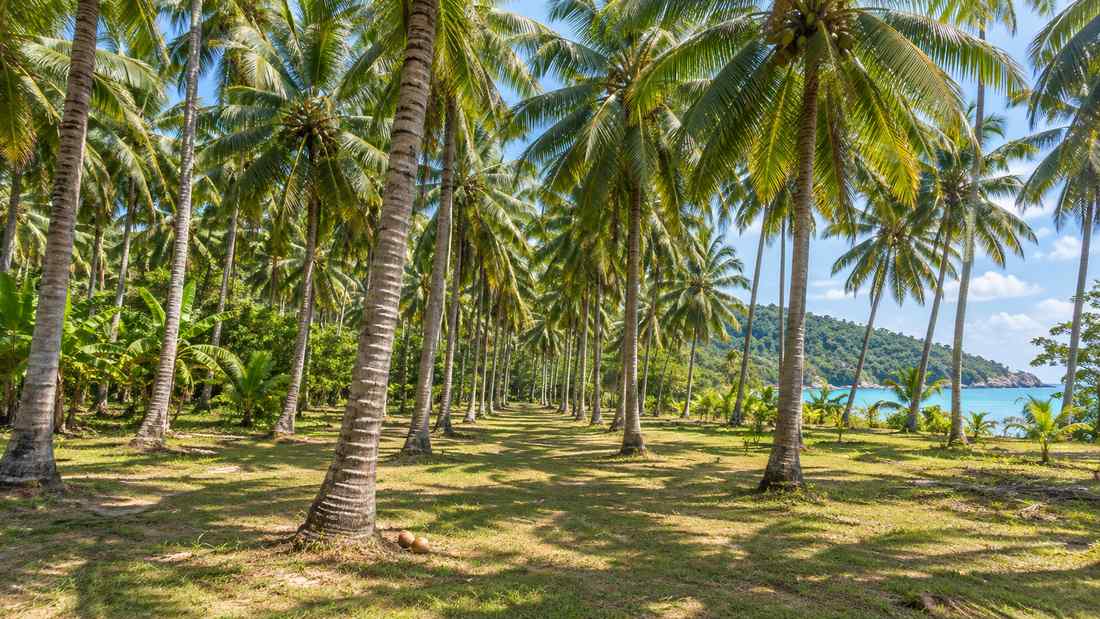
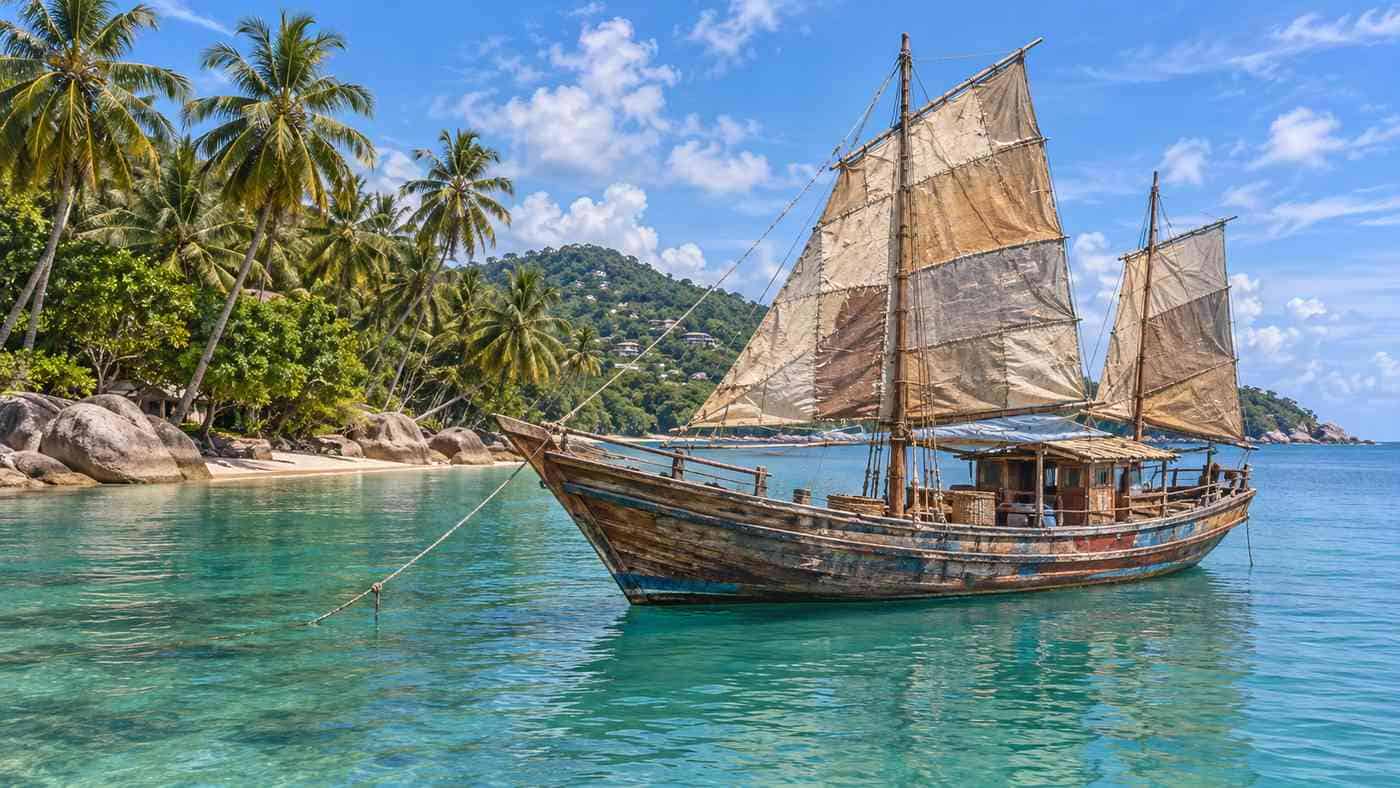
From the 19th century, many Chinese migrants came to Thailand, and on Samui most were traders from Hainan. They started the island’s cotton and coconut plantations and shipped the crop to the mainland on boats. Over time they blended into Thai society, but Hainanese temples and communities remain. Wikipedia notes that the Thai-Chinese families tended to live near the beaches, while ethnic Thai families lived further inland.
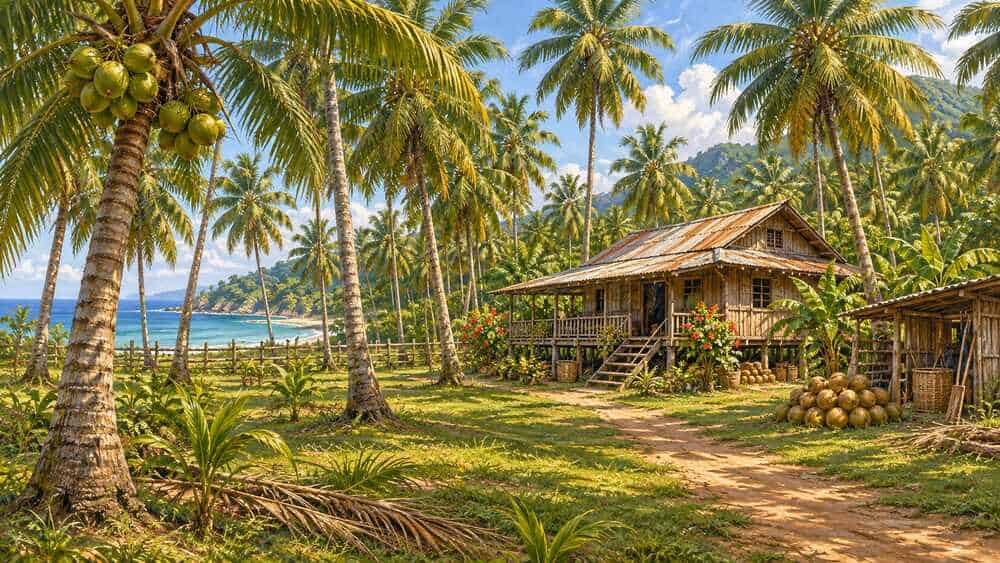
Coconuts shaped Samui for generations. Buffalo hauled them through the groves, a heritage still seen in the island’s buffalo-fighting tradition. Wikipedia also notes that trained macaques are still used to pick coconuts, a practice that raises welfare concerns. Coconuts and rubber remain exports alongside tourism.
How did tourism come to Samui?
Until the late 20th century Samui was an isolated, self-sufficient community. It had no roads until the early 1970s, and crossing the island could mean a whole-day trek through the hills. The first tourists were backpackers who stayed in simple huts provided by local people, and the sociologist Erik Cohen dated the start of modern tourism to the late 1970s.
Development began at Chaweng Beach and spread round the island. In 1985 the Tourism Authority of Thailand launched a master plan for tourism on Ko Samui and Surat Thani, and in 1989 Samui’s airport opened, bringing mass tourism in the 1990s. The local population was about 8,000 in 1913 and about 30,000 in 1970, and Wikipedia gives a 2023 estimate of about 70,000, with more than 200,000 people coming to the island to work. Our guide to the island’s beaches and areas shows how that growth shaped each coast.
Koh Samui culture: religion and communities
Most Samui people are Buddhist, and the island’s temples range from the famous Big Buddha to village temples more than two centuries old (see our guide to Koh Samui’s temples). There is a Muslim community centred on the village of Ban Hua Thanon, and a Thai-Chinese community whose shrines include Thailand’s tallest statue of Guan Yu, at Hua Thanon. Samui also has its own dialect of southern Thai.
Island rituals and festivals
Wikipedia describes several island customs:
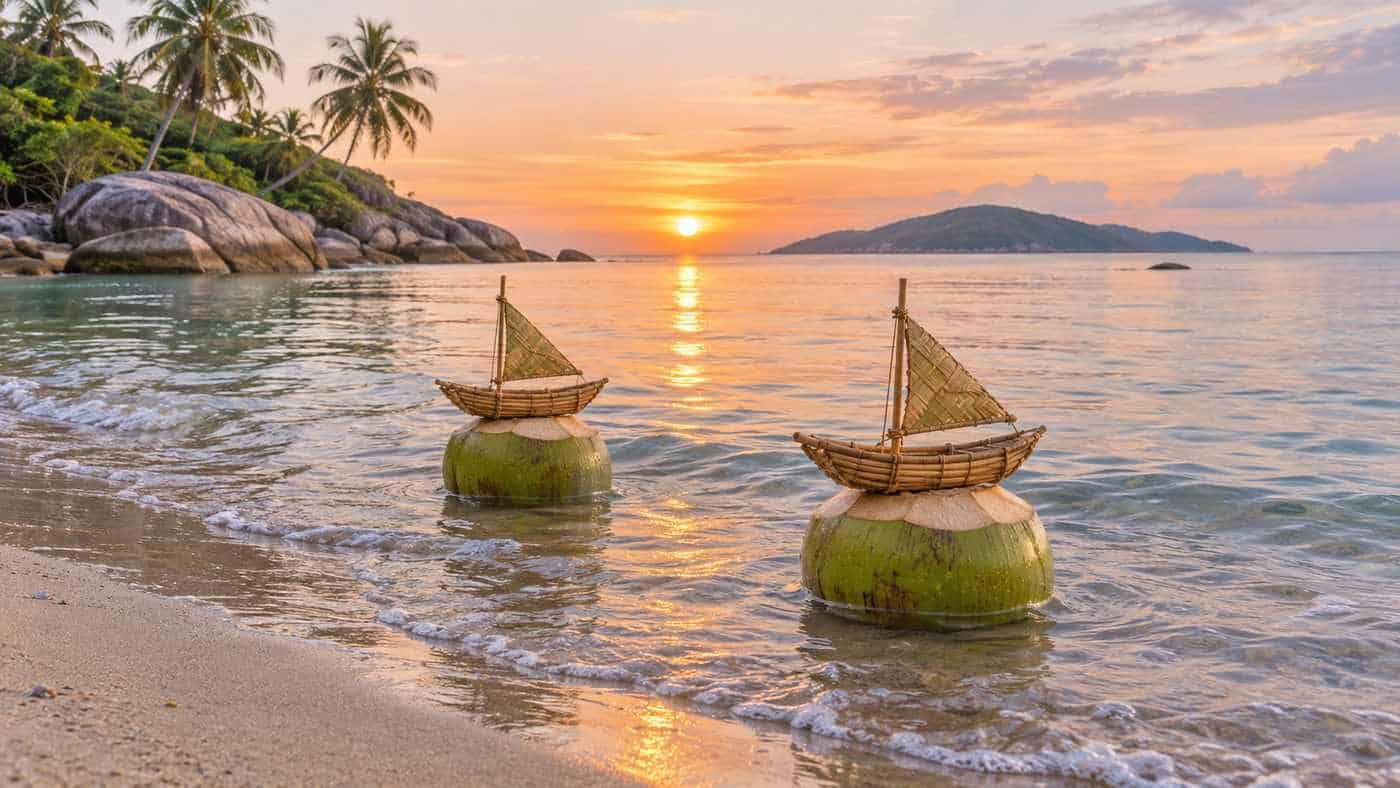
- Loy Khro: small bamboo boats, floated on young coconuts, are launched into the sea carrying hair, nail clippings and other offerings to cast away bad luck. It is practised at Baan Tai.
- Gin Hor: villagers bring food to share, now often at temple fairs and beach gatherings.
- Lah Pho Ta: held in June before village shrines to honour guardian spirits with savoury and sweet offerings, followed by a performance of Manora, the southern Thai dance-drama.
Newer events include the Samui Regatta and the Samui Latin Festival. The Koh Samui city municipality’s traditions page, in Thai, lists more local customs.
What is Samui food like?
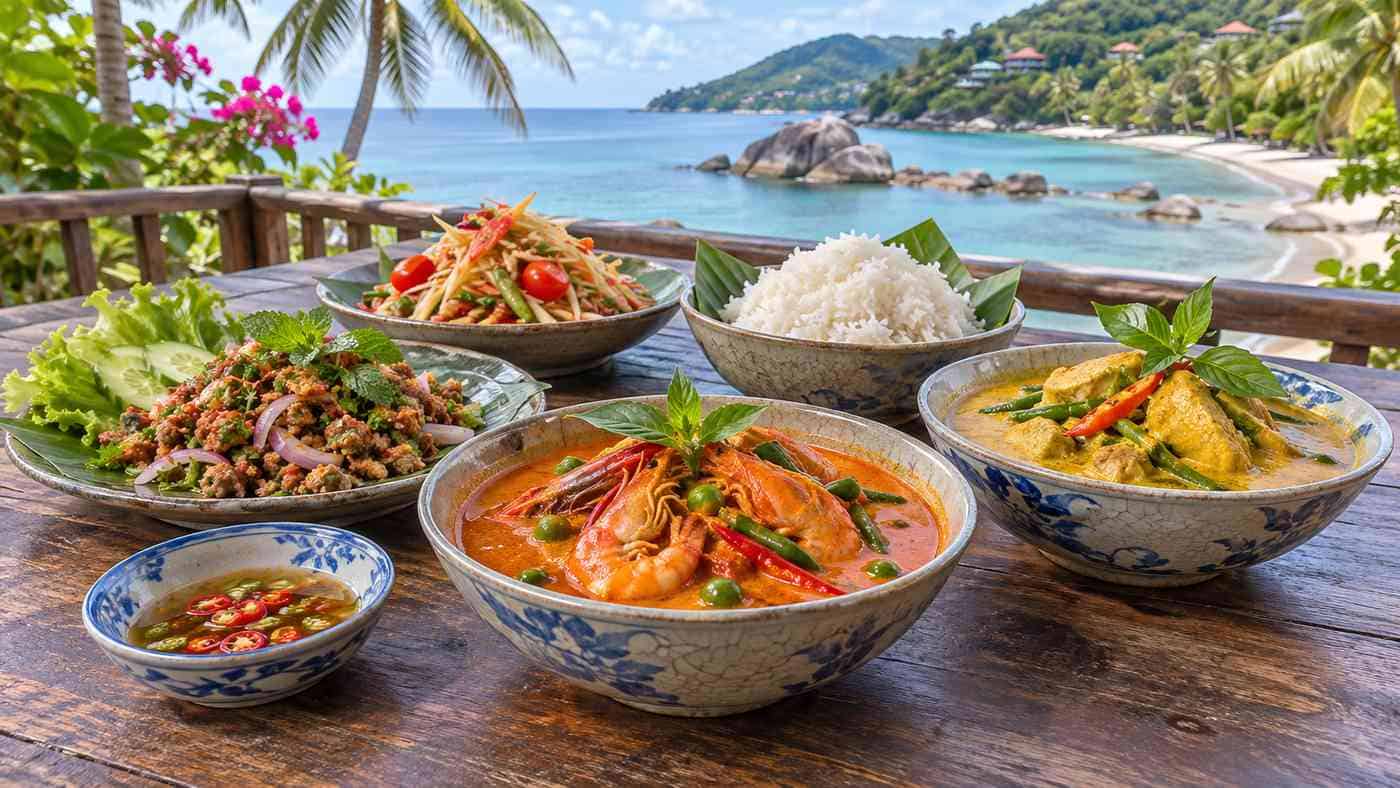
Samui cooking is southern Thai: spicy, rich in coconut and seafood, with influences from Malay and Indian cooking, as Wikivoyage notes. Wikipedia lists several dishes native to the island:
- Yam Rad Ley: a salad of raw fish with fermented shrimp paste.
- Yam Kati Hoi Phuekan and Yam Kati Goong Chon Nam Groi: spicy coconut salads with shellfish or shrimp.
- Tom Look Em: a squid broth.
- Wai Khua: reef squid cooked with coconut milk.
Visitors also find southern classics such as massaman curry and khanom jeen (rice noodles with fish curry). The TAT news service mentions local sweets such as kalamare and khanom ko, and Samui-style fried noodles. Night markets at Fisherman’s Village in Bophut and elsewhere are an easy place to try them.
Key takeaways
- Samui appears on a Chinese map of 1687 as Pulo Cornam, and the origin of its name is unknown.
- Hainanese traders started the coconut and cotton plantations in the 19th century.
- The island had no roads until the early 1970s, and the airport opened in 1989.
- Island rituals include Loy Khro, Gin Hor and Lah Pho Ta.
- Local dishes include Yam Rad Ley, Tom Look Em and Wai Khua.
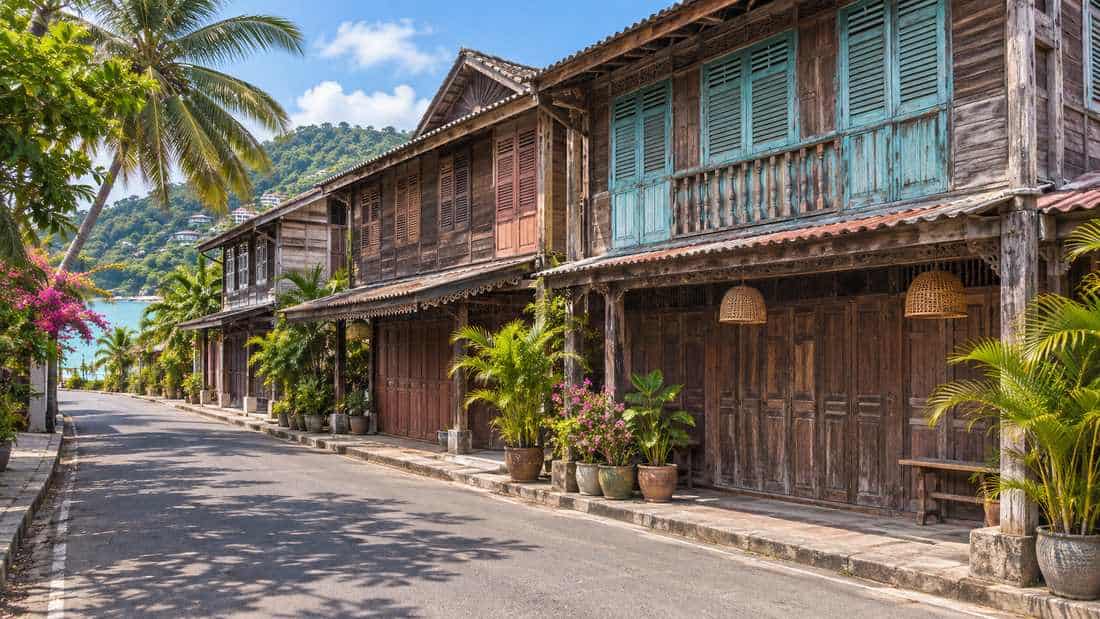
Visitors who would rather base themselves in a private house than a resort can compare private villas on Koh Samui, many of them in the hills above Bophut and Chaweng. For an evening among the island’s old shophouses, see our guide to Fisherman’s Village in Bophut.
Common questions
Who were the first people on Koh Samui?
Oral tradition says fishermen from the Malay Peninsula settled around the 6th century, but bronze drums found on the island suggest people lived there more than 2,000 years ago.
Why are there so many coconut palms on Samui?
Hainanese settlers started coconut plantations in the 19th century, and coconuts were the island’s main crop and export until tourism took over.
When did tourism start on Koh Samui?
Backpackers began arriving in the late 1970s. Large-scale tourism followed the opening of the airport in 1989.
What does Samui mean?
Nobody knows for sure. Theories link it to a local tree, a Hainanese word for “first island” and a Malay word for “safe haven”.
What food is Koh Samui known for?
Southern Thai seafood and coconut dishes, including island specialities such as Yam Rad Ley, Tom Look Em and Wai Khua.
How we put this together: history, population, rituals and dishes come from Wikipedia’s Ko Samui article and the sources it cites, cross-checked with Wikivoyage, the Tourism Authority of Thailand and the Koh Samui city municipality, read in November 2026. Oral traditions are labelled as such.