
In short: Fisherman’s Village is the old seafront of Bophut, on the north coast of Koh Samui: a lane of wooden Chinese-Thai shophouses beside Bophut Beach, now full of restaurants, cafés, small hotels and shops. Every Friday evening, from about 17:00 to 23:00, the beach road closes to traffic for the Walking Street, the island’s best-known night market. It is free to visit and about 15 minutes by road from the airport.
Updated 19 November 2026 by Samui Tourism Guide editors
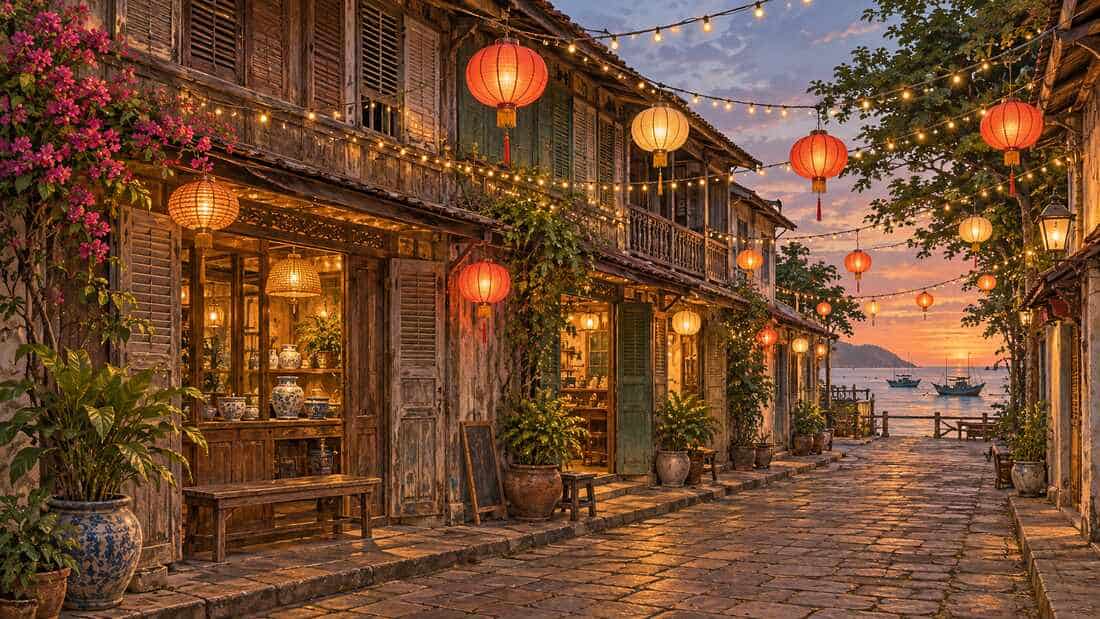
Most of Koh Samui’s tourist areas grew up after the 1970s, when the island’s first roads were built. Fisherman’s Village is different. The old seafront of Bophut was a fishing and trading settlement long before the resorts, and its row of wooden shophouses is among the few pieces of pre-tourism architecture left on the island.
Today Fisherman’s Village Koh Samui is one of the island’s favourite evening spots, quieter than Chaweng, with the beach on one side and the old shopfronts on the other. This guide covers its history, the Friday Walking Street, what to see and eat, and practical tips. For the island’s other beach areas, see our map of Samui’s beaches.
What is Fisherman’s Village?
Fisherman’s Village is the historic core of Bophut, a single street of two-storey Chinese-Thai shophouses running parallel to the beach, as Ferry Samui’s guide describes it. The street is less than a kilometre long, so it is easy to walk end to end. Most buildings now hold restaurants, bars, boutique hotels and shops rather than fishing businesses.
Wikivoyage calls Bophut “laid-back but growing fast”, known for its Fisherman’s Village and less developed than Chaweng, with plenty of restaurants, shops and bars. The beach is calm and faces north towards Koh Phangan.
Some terms first. A shophouse is a narrow building with a shop at the front and the family home behind or above. A walking street (in Thai, thanon khon doen) is a road closed to traffic for an evening market.
A short history of Bophut
Chinese traders, many from Hainan, settled on Samui’s north coast and took part in the island’s coconut trade. Our Samui history guide covers that story in more detail. Sources differ on exact dates: Samui69 dates the shophouses to the 19th and early 20th centuries and says Bophut pier was long one of the island’s main links to the mainland for coconut oil and dried fish, while other guides date the merchants’ arrival to the early 20th century.
As tourism grew in the 1970s and 1980s, fishing gave way to guesthouses, and the old street went through a quiet period. From the early 2000s Thai and foreign owners restored many of the shophouses rather than replacing them, which is why the village keeps its character, according to Visit Thailand Today.

When is the Fisherman’s Village Walking Street?
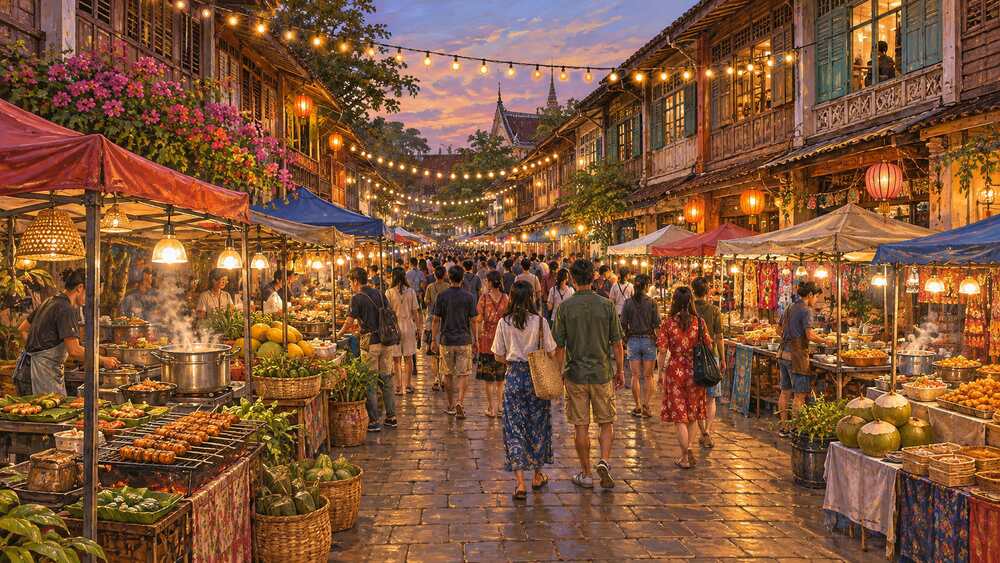
The main market is on Friday evenings. Visit Thailand Today says the beach road closes for the Walking Street from about 17:00 to 23:00, and the Hotels.com guide gives the same Friday hours. Stalls line the narrow road and the side lanes, selling street food, seafood, clothes, crafts and souvenirs, often with live music.
Some guides also list smaller markets on Monday and Wednesday evenings in the high season. Samui69’s market calendar describes those nights as smaller versions, with Friday the full market and the road closed. Days can change, so check locally before you plan a trip around them.
What to see, eat and buy
- The shophouses. Walk the beach road in daylight to see the wooden fronts, shutters and balconies without the crowds.
- The beach. Bophut Beach is calm for most of the year and good for an evening swim or a drink at sunset.
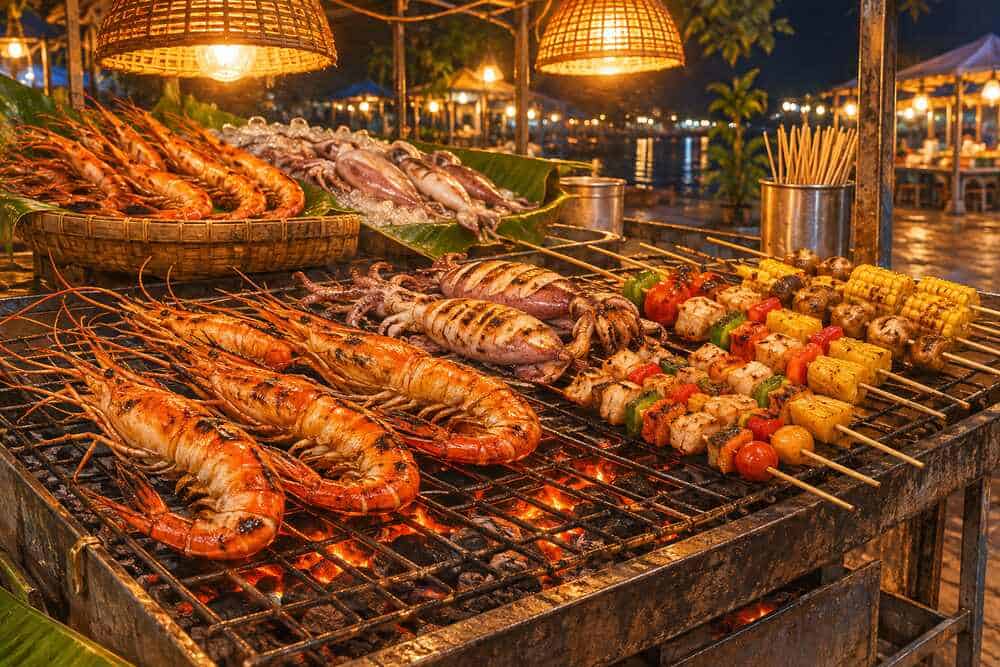
- Street food. At the Friday market, look for grilled seafood, satay, pad thai, coconut ice cream and fresh fruit shakes. Prices are usually marked.
- Crafts. Stalls sell carved soap, jewellery, clothes and small homewares. Bargain politely, if at all.
- Restaurants. The village has a wide choice of Thai, seafood and international restaurants, many with tables on the sand.
Getting there and practical tips
Fisherman’s Village is on the north coast, a short drive from Samui airport and roughly 20 minutes from Chaweng. Taxis and red songthaew trucks run along the ring road; on Friday nights traffic is heavy and parking near the beach road is limited, so arrive early or come by taxi.
- Cost. Entry is free; you pay only for what you buy.
- Best time. Arrive at about 17:00 to 18:00 on a Friday for the food before the crowds peak, or come on another evening for a quieter dinner.
- Families. The market is busy but relaxed; keep small children close in the crowds.
- Cash. Many stalls take cash only. ATMs are in the village.
- Weather. Stalls can thin out in heavy rain, especially from October to December. See our guide to the best time to visit Koh Samui.
Fisherman’s Village or Chaweng?
Chaweng, on the east coast, is Samui’s busiest beach, with the most hotels, clubs and late bars. Bophut is smaller and calmer, with an older streetscape, and is often chosen by couples and families who want restaurants and a walkable village without loud nightlife. Many visitors stay in one and visit the other for an evening. Our beach map compares the areas.
Nearby on the north coast
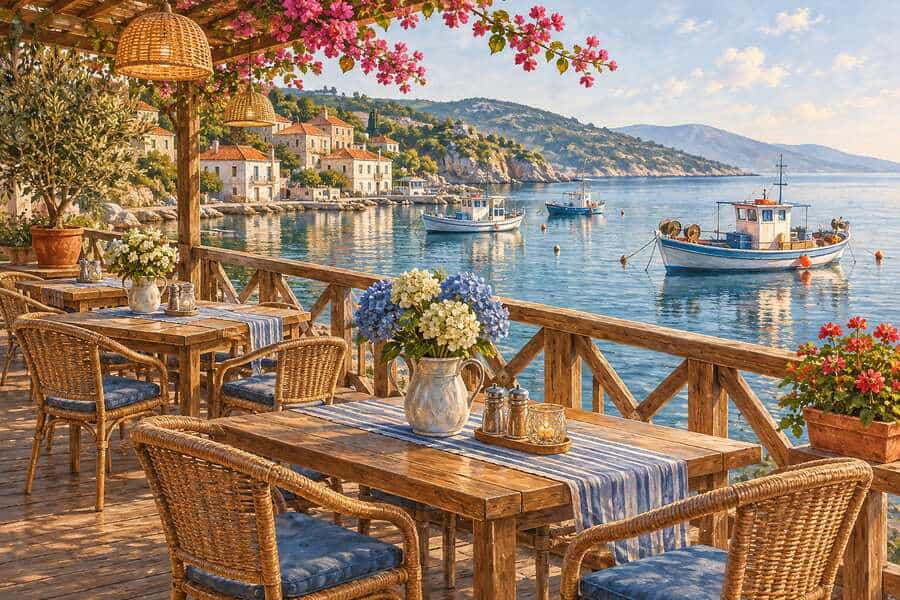
Bophut sits between Maenam to the west and Bangrak to the east. The Big Buddha at Wat Phra Yai is a few kilometres east, and the piers at Bangrak and Maenam are the starting points for the ferry to Koh Phangan and Koh Tao. Bophut is also a common starting point for diving and snorkelling trips, as Wikivoyage notes.
Key takeaways
- Fisherman’s Village is the old seafront of Bophut, on Koh Samui’s north coast, with wooden Chinese-Thai shophouses.
- The Friday Walking Street runs from about 17:00 to 23:00, when the beach road closes to traffic.
- Smaller markets are sometimes held on Monday and Wednesday evenings; check locally.
- Entry is free, the beach is calm and the village is close to the airport and the north-coast piers.
Common questions
What day is the Fisherman’s Village night market?
Friday is the main night, from about 17:00 to 23:00, when the beach road closes to traffic. Smaller markets are sometimes held on Monday and Wednesday in the high season.
Is Fisherman’s Village worth visiting?
Yes. It is the best-preserved old street on Samui, with a calm beach and good restaurants, and the Friday market is one of the island’s liveliest evenings.
How far is Fisherman’s Village from Chaweng?
About 8 km, or roughly 20 minutes by taxi, longer on Friday evenings when traffic is heavy.
Is there an entry fee?
No. The village and the Walking Street are free to visit.
Can you swim at Bophut Beach?
Yes. The beach faces north and is fairly calm for most of the year. As anywhere on Samui, the sea is rougher in the wet season from October to December.
How we put this together: descriptions of the village and Bophut come from Wikivoyage and Ferry Samui; history from Samui69 and Visit Thailand Today, which differ on dates, as noted; market days and hours from Visit Thailand Today, Hotels.com and Samui69’s market calendar. Market days can change, so check locally.
0 comments on “Fisherman’s Village, Bophut: Old Shophouses and the Friday Walking Street”Add yours →